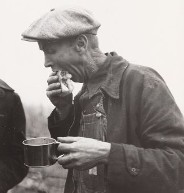

In 1984, an outbreak of thyrotoxicosis was observed among residents of southwestern Minnesota and the surrounding areas of South Dakota and Iowa. The source of the affliction, dubbed “hamburger thyrotoxicosis,” was traced back to the consumption of ground beef prepared from gullet trimmings processed by a single slaughtering plant. This was later confirmed by findings of bovine thyroid tissue in the trimmings as well as the observation of sudden increases in serum thyroid hormone concentrations in volunteers who ate the ground beef from this plant. The thyroid gland tissue of cattle produces T3 and T4, known as thyroxine and triiodothyronine respectively, which are also relatively heat-stable so that after being ground into hamburger by gullet trimming, these hormones also survived cooking. After consumption, these thyroid hormones are absorbed through the small intestine, enter the circulation and are biologically active. The hormone excess in the body’s bloodstream leads to clinical signs of hyperthyroidism such as nervousness, sleeplessness, weight loss, and fatigue. The USDA later banned the practice of gullet trimming for human food consumption in 1986. Interestingly, gullet trimming is not banned for pet food and the same condition, caused by consuming thyroid tissue, can arise in animals. This outbreak highlighted how butchering practices can have major health consequences, leading to stricter food safety standards to protect consumers.
Tag: Articles
-

Molecular Fingerprinting Used by Disease Detectives
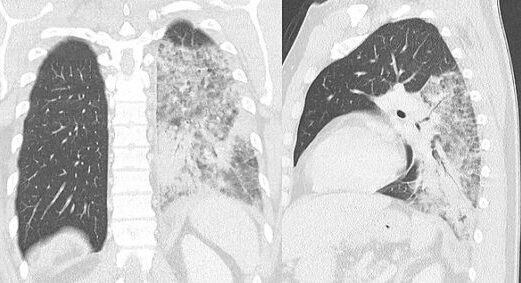
New York City’s South Bronx was the center of the largest outbreak of Legionnaires’ disease in the city’s history in 2015. Legionnaires’ disease—a sometimes lethal agent causing pneumonia—is caused by Legionella bacteria, which are commonly found in warm water systems like cooling towers and plumbing. Traditional public health investigations relied on a laboratory method called pulsed-field gel electrophoresis (PFGE) to match bacterial DNA from patients with potential environmental sources. However, PFGE lacks the precision to identify and resolve closely-related, but not identical, strains of Legionella. In this outbreak, Dr. Kim Musser used Whole-genome sequencing (WGS) as a molecular “fingerprint” to link a cooling tower to patient strains. She had developed molecular methods while working in the Wadsworth Center—New York State’s public health laboratory. In WGS, bacterial DNA is sheared, barcoded and identified, sequenced, and then analyzed via computational methods. WGS is a highly discriminatory method that can detect single nucleotide differences, allowing scientists to accurately pinpoint the source of outbreaks. During this Legionnaires’ outbreak in the Bronx, working with Don Weiss, the source was confirmed as a contaminated cooling tower when genetically identical Legionella bacteria matched between patients and the suspected cooling tower.
Another advanced molecular method used in this Legionnaires’ disease outbreak was polymerase chain reaction (PCR). PCR detects the presence of specific genetic material by amplifying DNA present in the sample with DNA primers specifically designed to detect the organism of interest. Although PCR can identify the presence and relative quantity of a pathogen, it does not provide a sequence analysis to link organisms between disparate sources—any permutation of patient and environmental sources. Dr. Musser continues to advance molecular methods, such as RNA baiting to extract DNA from clinical specimens rather than having to grow the bacteria on culture media.
Citations
https://pmc.ncbi.nlm.nih.gov/articles/PMC5349490/pdf/10.1177_0033354916689620.pdf
https://pmc.ncbi.nlm.nih.gov/articles/PMC11005328/pdf/jcm.01305-23.pdf
-

Ruth Rothstein—Effective Advocate
In Wind Beneath Their Wings: Improving a County Health System, Caryn Stancik and Elizabeth Reidy describe their work as the Chief Communications Officer and General Counsel for a large and expanding government-run urban health system. They credit Ruth Rothstein, former CEO of the Cook County Hospital, for establishing a culture that promoted women into leadership positions. Rothstein had a remarkable life, progressing to CEO of Mt. Sinai Hospital in Chicago and Cook County Hospital by demonstrating competence and an unwavering belief in justice. Her noteworthy accomplishments included building a new hospital to replace the old Cook County Hospital, acquiring funding for the eponymous Ruth Rothstein Core Center to provide HIV-AIDS care, and expanding the ambulatory clinic network to provide longitudinal healthcare. At Mt. Sinai Hospital, after being denied a job in medical administration because she did not have a college degree, Rothstein refused a secretarial position saying “I don’t type”. Her humor is evident when under a photograph of her with Golda Meir, the caption was added, “But can she type?”
https://commons.wikimedia.org/wiki/File:Cook_County_Hospital.jpg, Jeff Dahl