Author: William Trick

  • CDC’s Early Investigations into HIV-AIDS in New York City: Defining the Pandemic

    CDC’s Early Investigations into HIV-AIDS in New York City: Defining the Pandemic

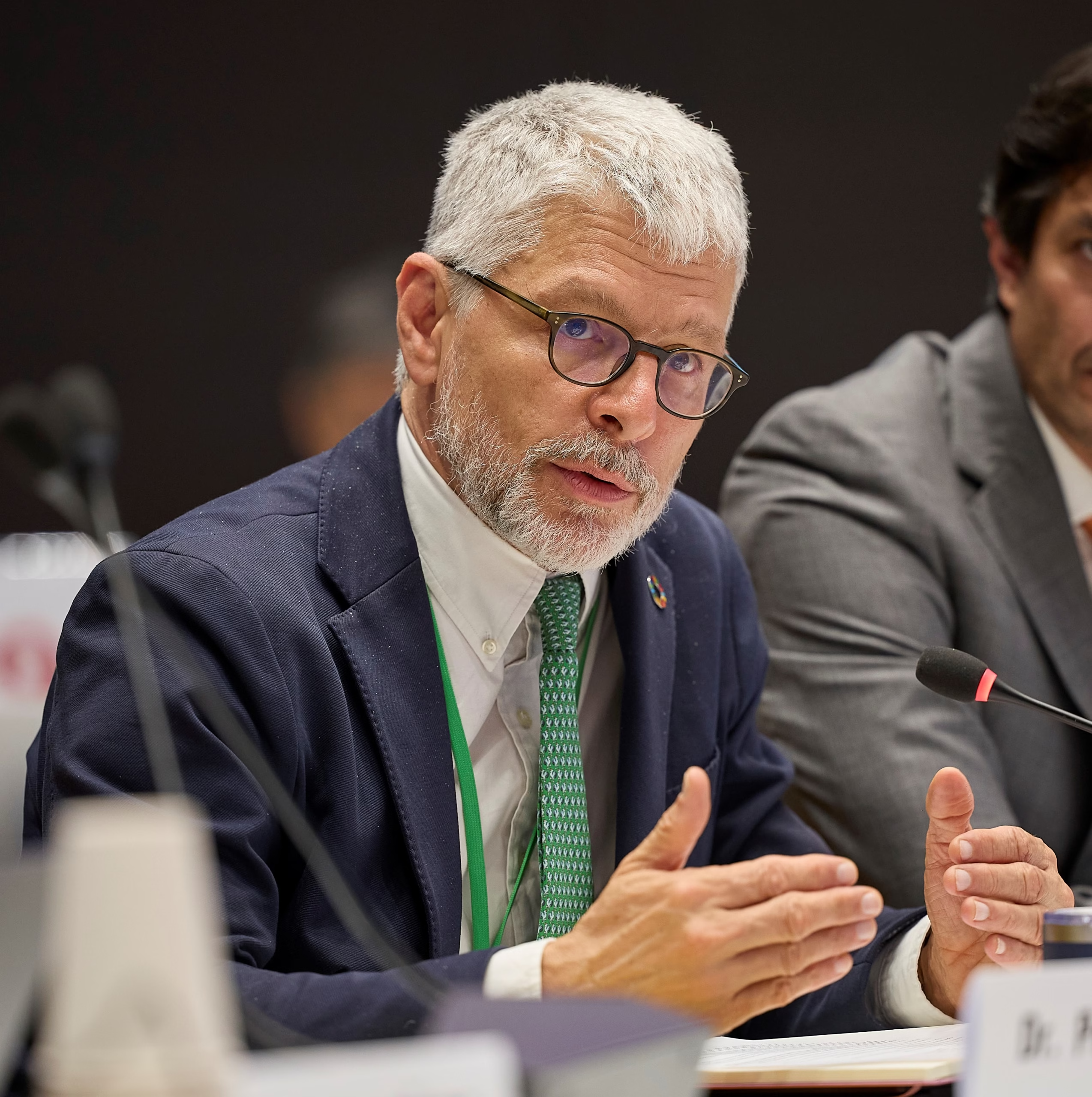
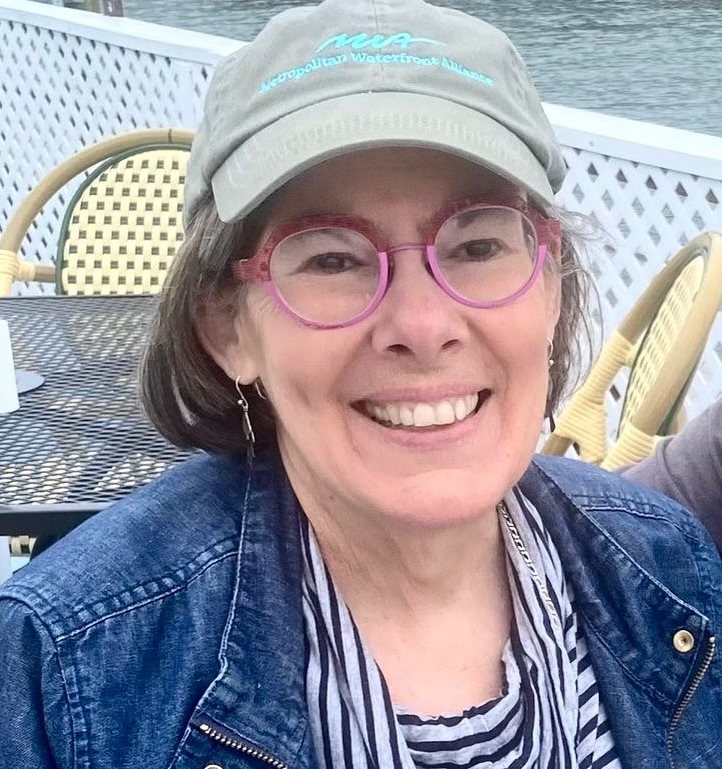
    Dr. Pauline “Polly” Thomas began her career with the Centers for Disease Control and Prevention (CDC) in New York City in 1981—the exact year the HIV/AIDS crisis first surfaced in public health reports. 
    As one of the world’s first medical field investigators, Dr. Thomas worked on the front lines to identify how the virus spread. Her evaluations were instrumental in proving that HIV was transmitted via blood and body fluids rather than casual contact.  She was in the field for critical early investigations identifying transmission by intravenous (IV) drug use, heterosexual contact, mother-to-infant transmission, and blood transfusions. She also evaluated a possible link to alkyl nitrites (“poppers”) and the controversial classification of Haitian nationality as a risk factor. Most importantly, Dr. Thomas’s persistent research proved that HIV could not be transmitted through casual contact, a discovery that fundamentally protected human rights and combated global stigma. 
    While the world has seen tremendous progress in HIV prevention and treatment, these life-saving advancements now face threats, from underutilized pre-exposure prophylaxis to the withdrawal from the U.S. President’s Emergency Plan for AIDS Relief (PEPFAR), the program launched by President George W. Bush in 2003 that has saved millions of lives worldwide.

    Intro music composed by Kevin MacLeod and downloaded at https://incompetech.com/

    Audio Players
    Spotify Amazon Apple Music
    replay_10
    play_arrow
    forward_10
    close
  • ER Toxicology: Poisonous Pleasures—Rat Poison & Pufferfish

    ER Toxicology: Poisonous Pleasures—Rat Poison & Pufferfish

    Dr. Steven Aks led the Toxicology Division and served as a physician in the legendary Emergency Department at Cook County Hospital—the real-life Pitt. As the frontline expert for life-threatening poisonings, he managed fentanyl overdoses, rat poison laced synthetic cannabinoids “fake weed” that went by the name Spice, and accidental ingestion of puffer-fish (Fugu). Steve describes the risks of drug smuggling or evasion through body stuffing and body packing, as shown in Season 3 of Euphoria. Human curiosity, thrill-seeking, and desperation continually fueled new threats, many of which uncovered larger outbreaks solved through investigations by the Centers for Disease Control & Prevention and the Illinois Department of Health. What would an emergency room toxicologist have in their doctor’s bag?

    Intro music composed by Kevin MacLeod and downloaded at https://incompetech.com/

    Audio Players
    Spotify Amazon Apple Music
    replay_10
    play_arrow
    forward_10
    close
  • An Epidemiologist Gives Back to His Cancer Team

    An Epidemiologist Gives Back to His Cancer Team

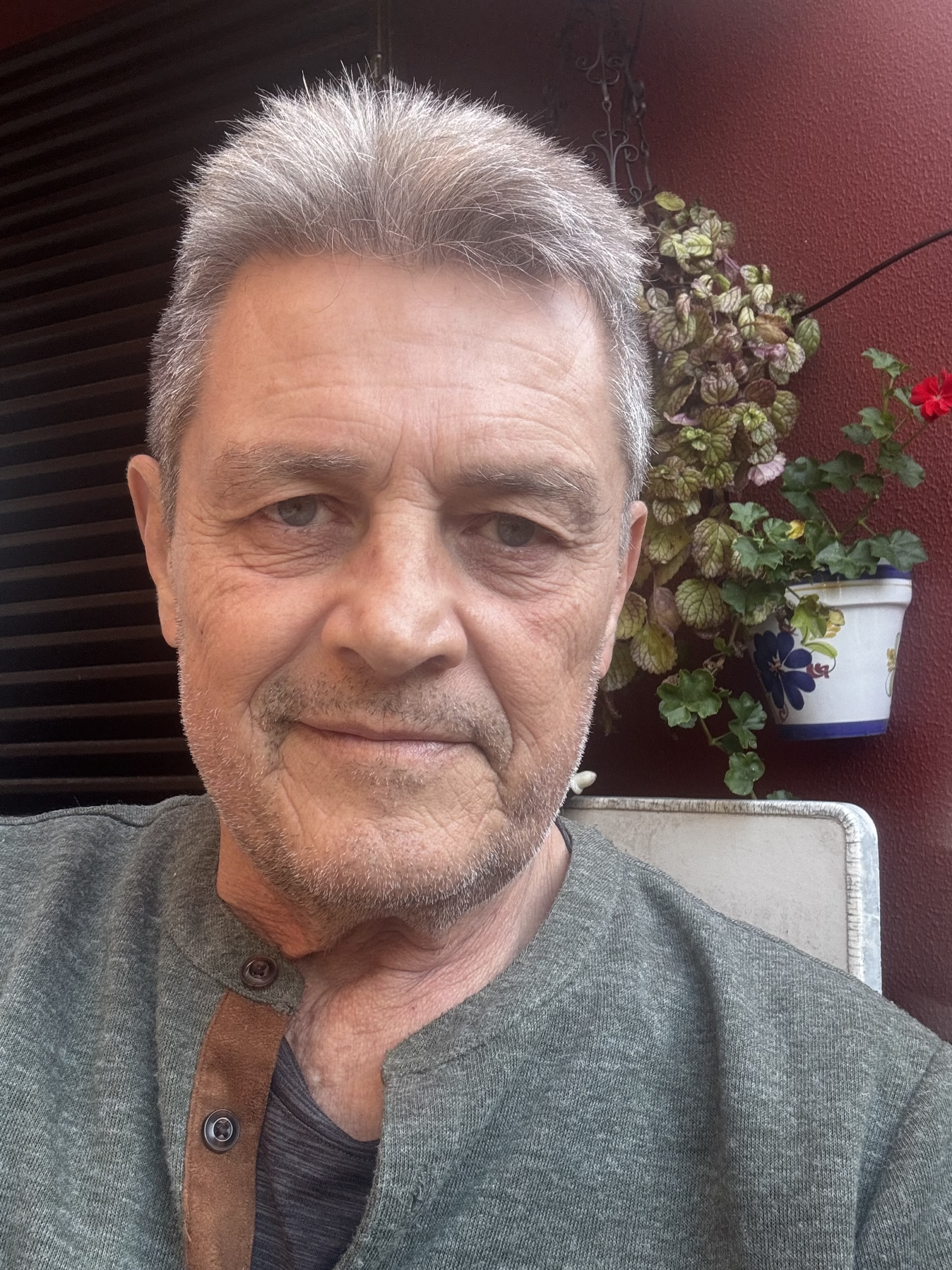
    Dr. Juan Alonso-Echanove spent most of his career in public health, including using epidemiologic principles to prevent firearm-related deaths in Puerto Rico.  What happens when an epidemiologist becomes a patient? After Juan was treated for pancreatic cancer, he chose to give back. Through lending his research skills and his public health mantra “information for action” to clinical oncology, he is helping his care team study the outcomes of cancer patients and how best to refine the healthcare journey for future patients. In this episode, he describes his public health career, his experience being treated for pancreatic cancer, and what he thinks the United States healthcare system should import from Spain.

    Intro music composed by Kevin MacLeod and downloaded at https://incompetech.com/

    Audio Players
    Spotify Amazon Apple Music
    replay_10
    play_arrow
    forward_10
    close
  • From Patient-Centered Care to Community-Centered Public Health

    From Patient-Centered Care to Community-Centered Public Health

    Dr. Bill Burman was foremost a clinician and researcher for Denver Health, providing patient-centered clinical care to patients infected by HIV or tuberculosis. After a surprise request to direct Denver’s public health department, he realized that his clinical care practice paradigm could translate into successful public health initiatives, where his impact could be amplified in the community. In this episode, Dr. Burman highlights that HIV care—through Ryan White funding—has long bridged the gap between clinical settings and community resources, and his attitude that “it’s the patients we don’t see in the waiting room” that are critical to reach, informed his successful public health career. He reflects on the gaps that exist between public health, social services, and medical care and how these connections are formed through time, trust, and supporting the needs of all partners.

    Intro and Outro music composed by Kevin MacLeod and downloaded at https://incompetech.com/

    Audio Players
    Spotify Amazon Apple Music
    replay_10
    play_arrow
    forward_10
    close
  • Community-Informed Informatics

    Community-Informed Informatics

    Numbers tell a story, but they rarely tell the whole story. Claire Dillavou, PhD, has made a career out of building and revising public health surveillance systems informed by the most critical variable: Community Context. She learned this lesson while evaluating an unexpected leveling off of a curve measuring the benefit of an economic impact program in Africa. The community revealed the story behind the numbers, one of the many lessons she learned that informed her successful public health informatics career at the LA County Department of Health, CDC, and ARPA-H.  A public health informatics visionary, she describes her work in Sub-Saharan Africa, the Los Angeles County Jail, and in partnership with Uber to advance corporate-public health partnerships.

    Intro and Outro music composed by Kevin MacLeod and downloaded at https://incompetech.com/

    Audio Players
    Spotify Amazon Apple Music
    replay_10
    play_arrow
    forward_10
    close
  • West Nile Virus Arrives in America…And Stays!

    West Nile Virus Arrives in America…And Stays!

    In 1999, the world braced for the Y2K computer bug. But in New York City, a biological bug, a mysterious virus causing fever, brain inflammation, and paralysis arrived. After Dr. Deborah Asnis reported a patient with unusual and severe symptoms to the NYC public health department, Dr. Marci Layton listened, recognized that the case was unusual, and then spearheaded the investigation. At the time, West Nile Virus was endemic in Africa and parts of Europe but had never been identified in the Western Hemisphere. Dr. Layton persisted through skepticism from experts to activate the necessary public health mechanisms to identify the virus causing the outbreak. 

    “Frolicking with Birds” outro music courtesy of Duo Yumeno, https://duoyumeno.com/

    Audio Players
    Spotify Amazon Apple Music
    replay_10
    play_arrow
    forward_10
    close
  • Saturday Night Fever!

    Saturday Night Fever!

    When CDC Epidemic Intelligence Service Officers get the call, they go wherever an outbreak leads. For pediatrician Jim Marks, that meant three weeks investigating a rubella outbreak with a source that inspired a memorable manuscript title. While Jim’s career began with infectious disease detective work, ultimately, he devoted his public health care on preventing and managing chronic diseases, and tackling the deep-rooted health disparities tied to race and socioeconomic status.  

    Audio Players
    Spotify Amazon Apple Music
    replay_10
    play_arrow
    forward_10
    close
  • The Wandering Nurse: Confronting Hepatitis, Polio, and Malaria

    The Wandering Nurse: Confronting Hepatitis, Polio, and Malaria

    What happens when an aspiring nurse is turned off by healthcare in college?  For Catherine Dentinger, a Peace Corps stint in the Democratic Republic of the Congo and a chance meeting with public health legend Jonathan Mann, changed her career. After attending nursing school of nursing at UCSF, she contributed to polio eradication in India, Ebola control in Guinea, and malaria prevention in Madagascar. Catherine’s CDC career is an interesting exploration of diseases and continents. Join her as she shares her stories from ‘beyond the bedside’, exploring what it means to be a public health nurse. 

    Audio Players
    Spotify Amazon Apple Music
    replay_10
    play_arrow
    forward_10
    close
  • Spine Tingling Fungal Infections

    Spine Tingling Fungal Infections

    Fungal infections are commonly associated with irksome, but relatively benign infections, such as athlete’s foot. However, when fungi (molds and yeasts) get into our blood or cerebrospinal fluid, the infections can be difficult to treat and lethal. The Centers for Disease Control and Prevention’s mycotics team serves as a national and sometimes international resource to detect, intervene, and prevent fungal infections. Dr. Tom Chiller was leading this team when an outbreak causing catastrophic spinal fluid infections was reported. Although there were many deaths, and chronic disabilities due to this outbreak, CDC mobilized hundreds of personnel through their command center, quickly identified the source, notified scores of patients about possible life-threatening infection of the spine and brain, removed the contaminated medication supply, and prevented an untold number of deaths. This story highlights how an astute clinician, Dr. Pettit at Vanderbilt University Medical Center, activated the state and federal public health system, eventually leading to legislation that improved the safety of the nation’s drug supply. 

    Audio Players
    Spotify Amazon Apple Music
    replay_10
    play_arrow
    forward_10
    close
  • From the Bedside to the Corner Office

    From the Bedside to the Corner Office

    What prepares a physician for the pace of Cook County Hospital? For Jay Shannon, it started with growing up among 11 siblings. After training at Parkland Hospital, Dr. Shannon began his career at Cook County Hospital, fulfilling a scholarship commitment to work in a medically underserved community. He developed a deep connection to Cook County Hospital, appreciating its extraordinary diversity—patients, colleagues, housestaff, and clinical cases. 

    Dr. Shannon transitioned from primary care physician to lung specialist to CEO, navigating intense political and operational challenges for an uncommonly long six-year tenure. He spearheaded a critical transformation: shifting Cook County from a system centered on charity care to one designed to serve the newly insured under the Affordable Care Act. Under his leadership, the institution built the region’s largest Medicaid Managed Care Organization and embraced innovative programs that addressed the root causes of poor health that arise far beyond the hospital’s walls. 

    This episode explores what it takes to drive systemic change in one of the nation’s largest governmental safety-net health systems. 

    Audio Players
    Spotify Amazon Apple Music
    replay_10
    play_arrow
    forward_10
    close