Author: William Trick

  • The Wandering Nurse: Confronting Hepatitis, Polio, and Malaria

    The Wandering Nurse: Confronting Hepatitis, Polio, and Malaria

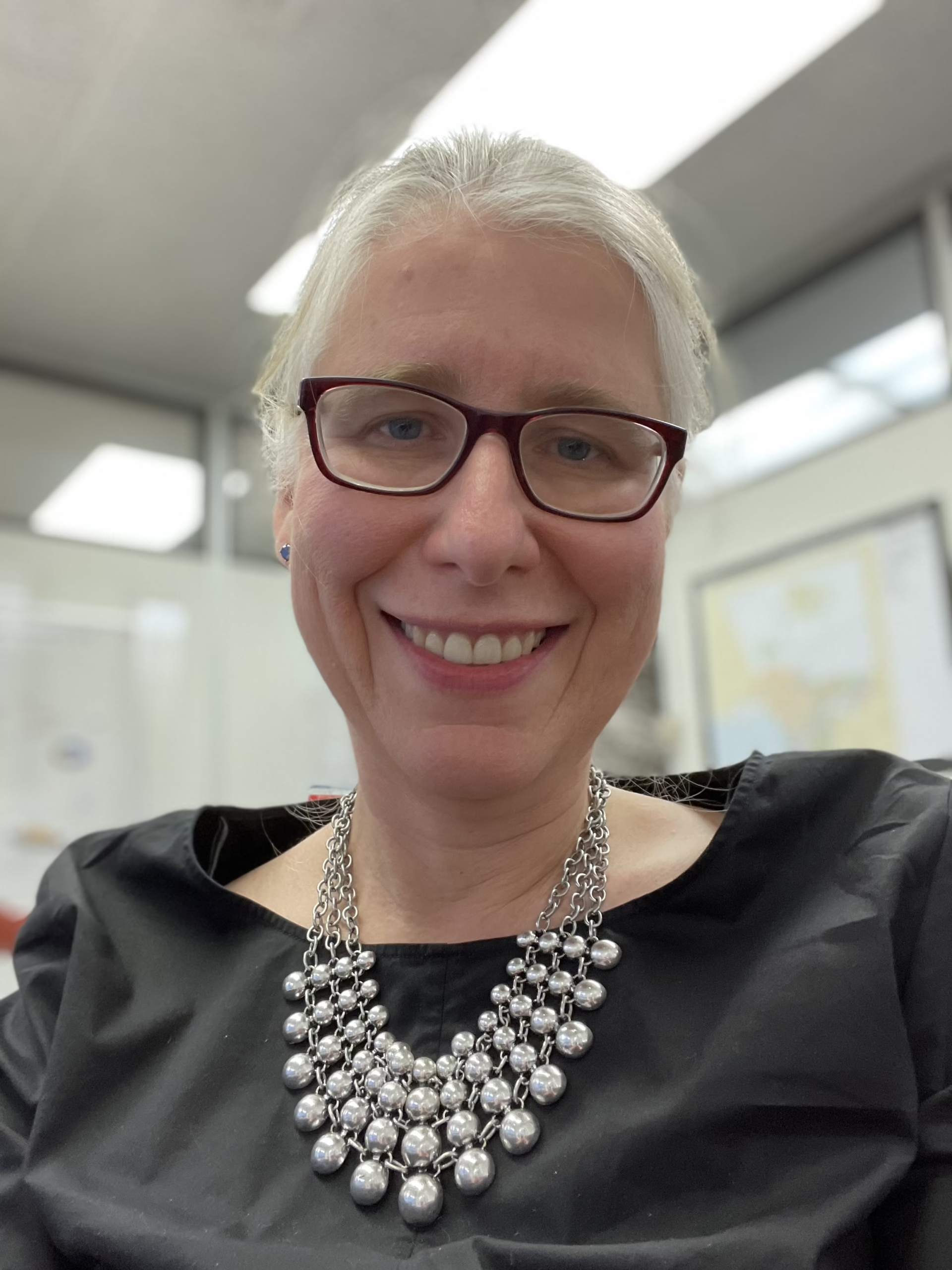
    What happens when an aspiring nurse is turned off by healthcare in college?  For Catherine Dentinger, a Peace Corps stint in the Democratic Republic of the Congo and a chance meeting with public health legend Jonathan Mann, changed her career. After attending nursing school of nursing at UCSF, she contributed to polio eradication in India, Ebola control in Guinea, and malaria prevention in Madagascar. Catherine’s CDC career is an interesting exploration of diseases and continents. Join her as she shares her stories from ‘beyond the bedside’, exploring what it means to be a public health nurse. 

    Audio Players
    Spotify Amazon Apple Music
    replay_10
    play_arrow
    forward_10
    close
  • Spine Tingling Fungal Infections

    Spine Tingling Fungal Infections

    Fungal infections are commonly associated with irksome, but relatively benign infections, such as athlete’s foot. However, when fungi (molds and yeasts) get into our blood or cerebrospinal fluid, the infections can be difficult to treat and lethal. The Centers for Disease Control and Prevention’s mycotics team serves as a national and sometimes international resource to detect, intervene, and prevent fungal infections. Dr. Tom Chiller was leading this team when an outbreak causing catastrophic spinal fluid infections was reported. Although there were many deaths, and chronic disabilities due to this outbreak, CDC mobilized hundreds of personnel through their command center, quickly identified the source, notified scores of patients about possible life-threatening infection of the spine and brain, removed the contaminated medication supply, and prevented an untold number of deaths. This story highlights how an astute clinician, Dr. Pettit at Vanderbilt University Medical Center, activated the state and federal public health system, eventually leading to legislation that improved the safety of the nation’s drug supply. 

    Audio Players
    Spotify Amazon Apple Music
    replay_10
    play_arrow
    forward_10
    close
  • From the Bedside to the Corner Office

    From the Bedside to the Corner Office

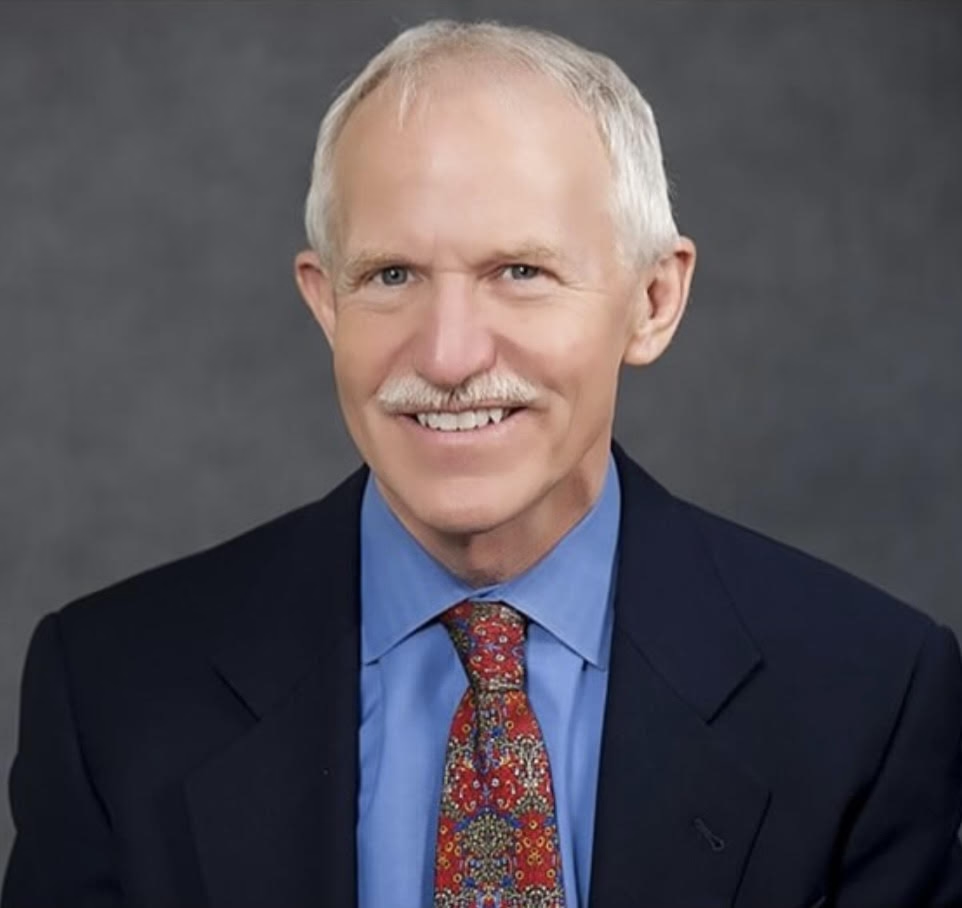
    What prepares a physician for the pace of Cook County Hospital? For Jay Shannon, it started with growing up among 11 siblings. After training at Parkland Hospital, Dr. Shannon began his career at Cook County Hospital, fulfilling a scholarship commitment to work in a medically underserved community. He developed a deep connection to Cook County Hospital, appreciating its extraordinary diversity—patients, colleagues, housestaff, and clinical cases. 

    Dr. Shannon transitioned from primary care physician to lung specialist to CEO, navigating intense political and operational challenges for an uncommonly long six-year tenure. He spearheaded a critical transformation: shifting Cook County from a system centered on charity care to one designed to serve the newly insured under the Affordable Care Act. Under his leadership, the institution built the region’s largest Medicaid Managed Care Organization and embraced innovative programs that addressed the root causes of poor health that arise far beyond the hospital’s walls. 

    This episode explores what it takes to drive systemic change in one of the nation’s largest governmental safety-net health systems. 

    Audio Players
    Spotify Amazon Apple Music
    replay_10
    play_arrow
    forward_10
    close
  • Insuring America’s Poor

    Insuring America’s Poor

    Two pivotal moments shaped American healthcare: the creation of Medicaid in 1965 and the signing of the Affordable Care Act in 2010. While the ACA slashed the uninsured rate by nearly half, the system remains fragile. In this episode “Insuring America’s Poor”, George Washington University Professor Sara Rosenbaum—a key architect of Medicaid expansion, including the Children’s Health Insurance Program (CHIP,) and the Vaccines for Children program—reflects on her career and issues a stark warning. She joins me to discuss the catastrophic implications of the One Big Beautiful Bill Act of 2025 and how it threatens to destabilize healthcare for millions of millions of middle- and low-income Americans. 

    Audio Players
    Spotify Amazon Apple Music
    replay_10
    play_arrow
    forward_10
    close
  • Beyond Headlines Building Health

    Beyond Headlines Building Health

    In the 1980s, pediatricians often were called to evaluate febrile children for meningitis—a disease that could mean lifelong disability, or death. Today, that scene is dramatically less common, thanks to public health interventions championed by the CDC and lifesaving vaccines recommended by the Advisory Committee on Immunization Practices. Dr. Anne Schuchat paused her clinical career to join CDC’s Epidemic Intelligence Service, which turned into decades of leadership at the CDC, including serving as Principal Deputy Director and twice as Acting Director. From solving outbreaks to leading astoundingly successful efforts to reduce bacterial meningitis in infants through vaccination and coordinated clinical care, Dr. Schuchat’s work reflects the power of sustained, collaborative, evidence-based public health action. 

    Audio Players
    Spotify Amazon Apple Music
    replay_10
    play_arrow
    forward_10
    close
  • Chicken Livers in NYC & Guppies in Los Angeles: Public Health Responses

    Chicken Livers in NYC & Guppies in Los Angeles: Public Health Responses

    Dr. Sharon Balter, physician and poet, reflects on her career leading outbreak responses at the CDC, and the public health departments of New York City and Los Angeles. Drawing on her experiences at the Federal level and in the United States’ two largest local public health jurisdictions, she offers a rare insider perspective on the strengths and complexities of the U.S. federated public health system.  

    Amid unprecedented challenges facing the field, she also delivers an optimistic message about a career in public health, offering perspective, reassurance—a much-needed balm for a frustrated workforce. 

    Audio Players
    Spotify Amazon Apple Music
    replay_10
    play_arrow
    forward_10
    close
  • Public Health Crises from CDC to Alaska

    Public Health Crises from CDC to Alaska

    After attaining zoology and medical degrees, Dr. Jay Butler’s medical career took an unexpected turn when he discovered the world of public health through the CDC’s Epidemic Intelligence Service. That discovery set him on a path that led to impactful roles with the Alaska Department of Health, the Alaska Native Tribal Health Consortium, and the Centers for Disease Control and Prevention in Atlanta. 

    In every position, Jay sought out the latest crisis and in the spirit of the CDC’s mission, “ran to the fire.” His long and diverse career has given him a unique perspective on how public health agencies can collaborate with each other and with communities to advance health. 

    Now preparing to begin a new chapter as Dean of the University of Alaska College of Health, Jay reflects on the lessons, challenges, and motivations that have shaped his public health journey—and his drive for personal growth that keeps him motivated and continuously learning.

    Audio Players
    Spotify Amazon Apple Music
    replay_10
    play_arrow
    forward_10
    close
  • FoodNet: Monitoring Foodborne Illness for the United States

    FoodNet: Monitoring Foodborne Illness for the United States

    In the early 1990s, a devastating outbreak of contaminated beef led to kidney damage and death among children, sparking a call to action on food safety. In response, the CDC, USDA, FDA, and several state health departments launched FoodNet in 1995—a surveillance system designed to monitor the incidence and severity of foodborne illnesses across the United States.  

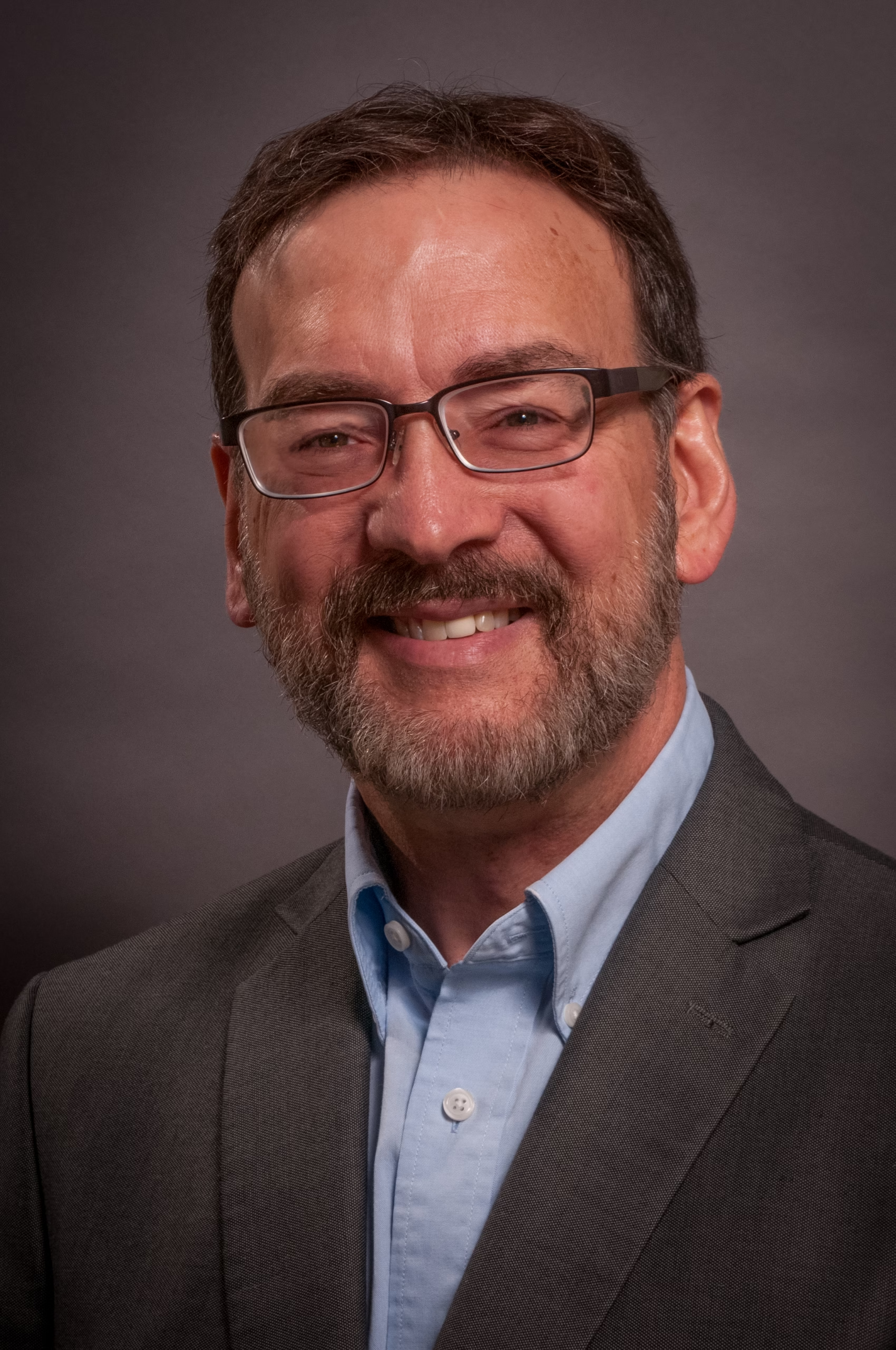
    Dr. Kirk Smith, an epidemiologist, veterinarian, and director of Minnesota’s FoodNet site, shares his insights from decades of work protecting the nation’s food supply. Dr. Smith discusses how FoodNet works, best practices in food safety,  and a particularly unusual and interesting Salmonella outbreak in an elementary school. 

    Audio Players
    Spotify Amazon Apple Music
    replay_10
    play_arrow
    forward_10
    close
  • See·Believe·Create

    See·Believe·Create

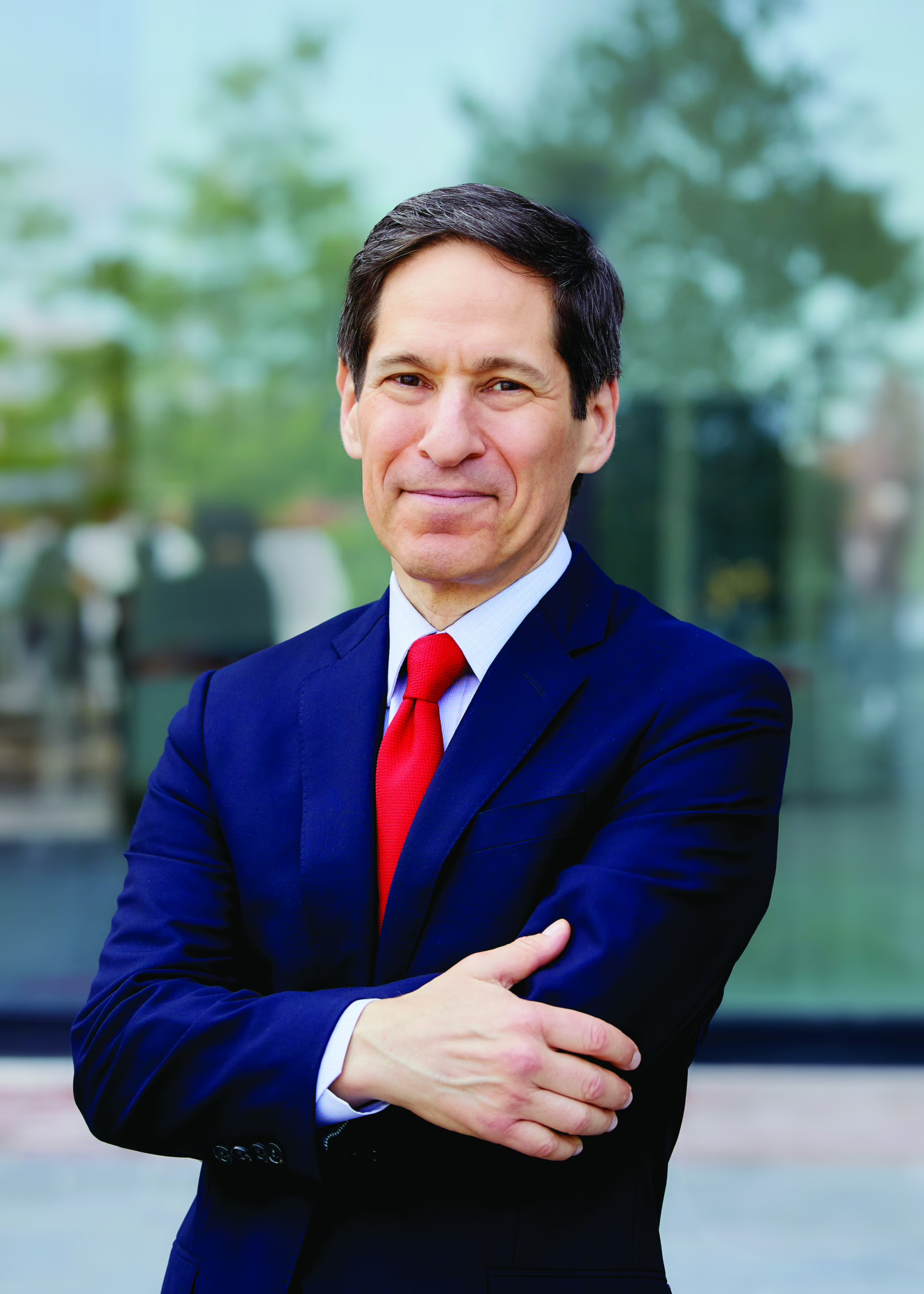
    Dr. Frieden has led public health institutions through some of the most defining moments of our time—from his stewardship of New York City’s Department of Health to his leadership of the Centers for Disease Control and Prevention. In his new book, The Formula for Better Health: How to Save Millions of Lives—Including Your Own, he distills decades of experience into a powerful approach: See·Believe·Create. Dr. Frieden explains how rigorous surveillance and data serve as public health’s superpower, allowing leaders to identify needs, design effective programs, and measure life-saving impact. As President and CEO of Resolve to Save Lives, he works on a global scale, advancing efforts to prevent millions of premature deaths by treating hypertension and promoting healthy eating.

    Through his optimistic and action-oriented perspective, we are reminded that—even amid today’s challenges—public health can transform and thrive. 

    Audio Players
    Spotify Amazon Apple Music
    replay_10
    play_arrow
    forward_10
    close
  • Ground Zero: Santa Clara County’s COVID Response

    Ground Zero: Santa Clara County’s COVID Response

    Dr. Sara Cody spent her career at Santa Clara County’s Department of Public Health. When COVID-19 first struck the United States, Santa Clara County was among the earliest and hardest hit. Dr. Cody reflects on the intense decision-making of those early days, the public’s fatigue and frustration, and the necessity of coordinating decision-making across public health jurisdictions. Drawing on her early training in CDC’s Epidemic Intelligence Service—where she investigated outbreaks linked to contaminated apple juice and raw milk—those formative experiences shaped her approach to managing the pandemic. Dr. Cody’s story is one of a deep sense of duty to community and an inside look at what it means to lead in local public health when decisions have enormous consequences.

    Audio Players
    Spotify Amazon Apple Music
    replay_10
    play_arrow
    forward_10
    close